Student archaeologists discover 2,000-year-old Roman treasures in the UK
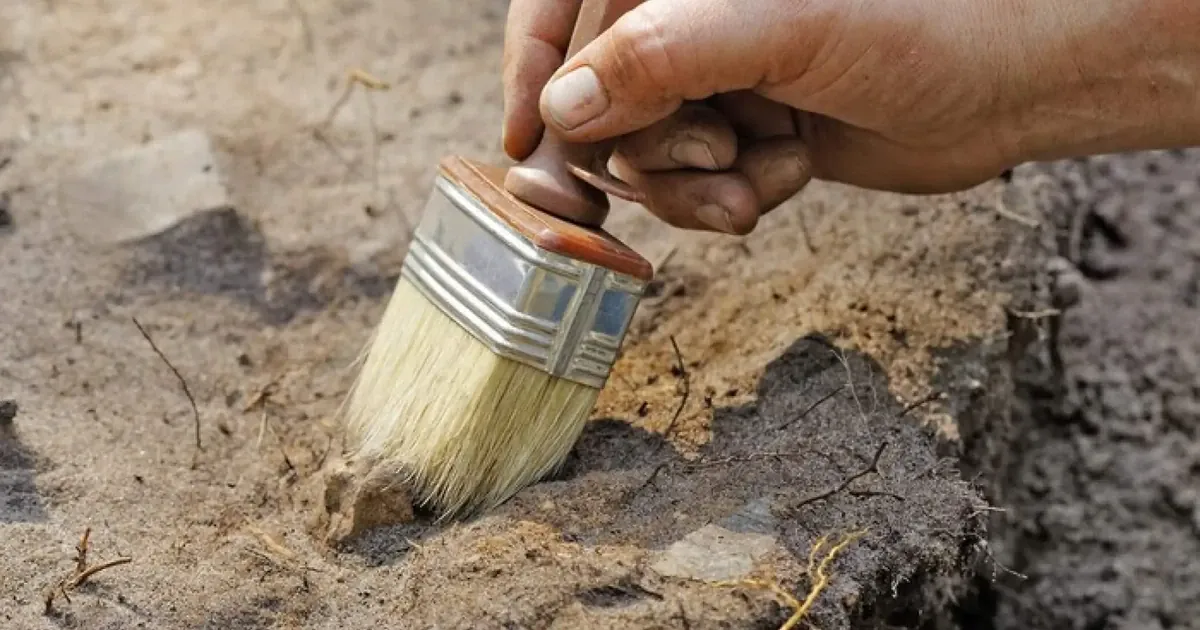
First-year students from Newcastle University during excavation practice in northern England uncovered unique Roman artifacts, including a pristine gold chain and a gemstone depicting Jupiter.
 👥Society
Photo: TSN
Key points
- Newcastle University first-year students uncovered Roman artifacts.
- Discoveries include a gold chain and a gemstone featuring Jupiter.
- Excavations took place near Hadrian's Wall in northern England.
Archaeological research frequently yields unexpected discoveries, but this time fortune favored beginners. First-year students from Newcastle University during their very first practical excavation in Redesdale, northern England, uncovered a collection of valuable artifacts from the Roman Empire. The finds were made near the historic Hadrian's Wall, which once served as the northern frontier of Roman Britain.
Valuable finds from day one
On the very first day of fieldwork, student Eliza Zallou discovered a gold chain fragment measuring about seven centimeters, crafted in an intricate loop-in-loop technique. According to the student, achieving such a result at the start of an archaeological career felt unreal. Such jewelry in ancient times was made of pure gold and typically worn by high-ranking military officials or their family members. On the same day, another student, Shannon Wood, found a piece of lead bearing traces of a Latin inscription, the exact meaning of which researchers have yet to determine.
Over the following days, the expedition yielded further artifacts. Megan Potter recovered a gilded military mount, likely part of equipment or horse harness. Later in the week, Maisie Whatmough and Zoe Yuill stumbled upon a carnelian intaglio—a gemstone featuring delicate intaglio carving depicting Jupiter, the supreme Roman god. In addition, researchers uncovered ancient coins, weapon fragments, clothing elements, and graffiti scratched onto Roman pottery.
Significance for science and heritage
Newcastle University has been investigating this archaeological site for over three decades, aiming to reconstruct the daily lives of people in the Roman borderlands. Project leaders emphasize that the recovered items carry immense value not just for their material or aesthetic worth. They provide crucial insights into how Roman military garrisons and local communities interacted, shedding light on the everyday realities of ancient settlements.
Source TSN — tsn.ua/tsikavinki/pershokursnytsi-rozkopaly-skarby-vikom-2000-rokiv-shc… ↗
Read next
 🚨Events
Electricity Restored in Rivne Region After Russian Attack
Electricity has been restored in the Sarny district of the Rivne region after a Russian attack. The head of the Rivne Regional Military Administration, Oleksandr Koval, a…
 🎭Culture & Sport
Autumn Rose Care: Pruning Tips for Chortkiv Gardeners
Experts explain why it is best to avoid radical pruning of roses until steady frosts arrive.
 🛡️Security
Estonia affirms Ukraine's right to self-defense following incident in the Gulf of Finland
Estonian Foreign Minister Margus Tsahkna stated that the strike on a Russian vessel is a consequence of Russian aggression, supporting Ukraine's right to defend itself.
 🛡️Security
Elderly woman rescued from rubble in Dymer: death toll rises
Search and rescue operations continue in the Kyiv region following a drone strike on a residential building. The death toll from the attack has reached nine.
 🛡️Security
Russian corvette reportedly hit by Ukrainian drones in Libya
A Russian military corvette, the 'Mercury', was severely damaged by an explosion in the port of Benghazi, with sources suggesting a potential Ukrainian drone strike.
 🛡️Security
Russia tests NATO defense algorithms through airspace violations, says Dmytro Kashchenko
Military expert Dmytro Kashchenko suggests that Russian incursions into NATO airspace are calculated probes of the Alliance's eastern flank readiness.