Parliamentary Temporary Inquiry Commission Targets Shadow Schemes in Gambling and Billion-Hryvnia Budget Losses
The Verkhovna Rada's Temporary Inquiry Commission has reviewed issues regarding illegal gambling and the use of banking infrastructure for tax evasion.
 💼Economy
Photo: UNIAN
Key points
- Parliamentary commission reviews illegal gambling issues
- Shadow market segment estimated at 90.9 billion hryvnias
- P2P transfers utilized to disguise payments as charity
The Verkhovna Rada's Temporary Inquiry Commission on Economic Security reviewed the current situation in the gambling market during its meeting on November 19. Parliamentarians focused on large-scale financial abuses, tax evasion, and the operation of illegal online casinos that utilize various loopholes to process payments bypassing state oversight.
Billion-Hryvnia Budget Losses and Oversight Challenges
According to official data, the total turnover of funds in the gambling sector remains at 154–157 billion hryvnias. Meanwhile, from January to October of the current year, revenues to the state budget from the legal segment decreased by 29% compared to the same period last year. Preliminary estimates suggest that the shadow share of the market has reached approximately 90.9 billion hryvnias, while total budget losses could amount to about 40 billion.
MP Yaroslav Zheleznyak outlined the mechanisms used by illegal platforms to accept payments during the commission meeting. Specifically, peer-to-peer (P2P) transfers to bank cards of individuals are employed, artificially masking transactions as charitable fundraising, military support, or vehicle purchases. Through this system, payments are processed via legitimate financial institutions disguised as everyday or volunteer transfers.
Questions Raised for Law Enforcement and Tax Authorities
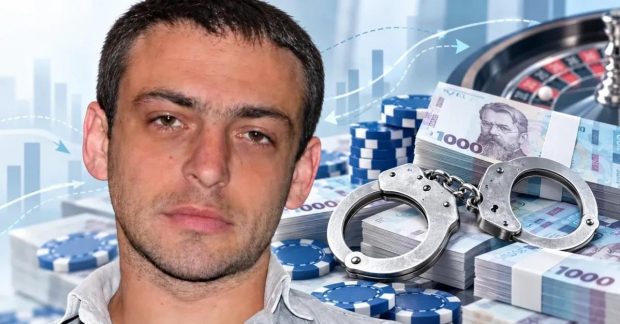
The commission paid special attention to payment systems associated with former district council deputy Maksym Sigalov and his partner Rasim Tagiyev. Their affiliated company, Diamond Pay, lost its National Bank license back in the summer of 2024 due to providing false information and ties to the Russian Federation, but the scheme transitioned into P2P operations. According to investigative reports, the total volume of transactions involving these structures reached 238 billion hryvnias over two years.
At the same time, Economic Security Bureau Deputy Director Pavlo Buzdyhan reported that over 100 criminal proceedings are active in this sector, yet he failed to provide specific successful case outcomes. Committee discussions led by Danylo Hetmantsev highlighted that tax authorities and the bureau have failed to notice large-scale shadow schemes for years, leaving the effectiveness of countering illegal gambling at a low level.
Source UNIAN — unian.ua/incidents/parlamentska-tsk-vzyalasya-za-shemi-maksima-siga… ↗
Read next
 🚨Events
Electricity Restored in Rivne Region After Russian Attack
Electricity has been restored in the Sarny district of the Rivne region after a Russian attack. The head of the Rivne Regional Military Administration, Oleksandr Koval, a…
 🎭Culture & Sport
Autumn Rose Care: Pruning Tips for Chortkiv Gardeners
Experts explain why it is best to avoid radical pruning of roses until steady frosts arrive.
 🛡️Security
Estonia affirms Ukraine's right to self-defense following incident in the Gulf of Finland
Estonian Foreign Minister Margus Tsahkna stated that the strike on a Russian vessel is a consequence of Russian aggression, supporting Ukraine's right to defend itself.
 🛡️Security
Elderly woman rescued from rubble in Dymer: death toll rises
Search and rescue operations continue in the Kyiv region following a drone strike on a residential building. The death toll from the attack has reached nine.
 🛡️Security
Russian corvette reportedly hit by Ukrainian drones in Libya
A Russian military corvette, the 'Mercury', was severely damaged by an explosion in the port of Benghazi, with sources suggesting a potential Ukrainian drone strike.
 🛡️Security
Russia tests NATO defense algorithms through airspace violations, says Dmytro Kashchenko
Military expert Dmytro Kashchenko suggests that Russian incursions into NATO airspace are calculated probes of the Alliance's eastern flank readiness.